The other day on Amazon, I bought Mysteries and Lore of Western Maryland: Snallygasters, Dogmen, and other Mountain Tales by Susan Fair. I haven't spent much time in western Maryland, but it seems like an interesting place. I picked up this book because I intend to visit there more often and wanted to know what places might be interesting to see.
The book is broken up into four parts. Part one is about legendary monsters. Part two is mainly about ghosts . Part three is about weird or strange happenings. Part four is about crimes, odd places and mountains.
In Part one, the author wrote about, among other things, the Snallygaster, a flying beast that allegedly tormented the good people of western Maryland in the days before people had ready access to cameras. The author essentially debunked this legend and offered a reasonable explanation for how it got started. She also discussed other legendary monsters such as the Snarly Yow, the Jabberwock, and the Dwayyo. I confess that I would have enjoyed this part of the book more if the author had argued that these beasts were real and offered 'evidence' that they were still stalking the poor people of western Maryland, but I guess her factual take on these subjects was more educational.
In Part two, the author addressed "Eerie Entities" of western Maryland. Of most interest to me, was the story about Witch Margery who lived on South Mountain and used her satanic power to terrorize anyone who might come across her. The author also wrote about the Museum of Civil War Medicine in Frederick that is allegedly haunted by, among other spirits, a thieving civil war doctor/embalmer. In addition to the other haunted places, we also learn that little green men described as leprechauns inhabit Allegany County thanks to a General Braddock who somehow managed to bring them over when he left Ireland for Maryland in 1755. Although I can see the Ancient Alien people making an argument that these were really aliens and they were helping the British during the French and Indian War.
Part three covered stuff that could just generally be described as weird. The author wrote about George Alfred Townsend, who bought a large estate out in Burkittsville with a personal mausoleum that was never used. The author also wrote about Michael Zittle, Jr., the so-called Wizard of South Mountain, who in the 1800s attempted to cure people of various diseases using his "evil spell book." The author debunked the idea that Zittle was using demonic powers. He was a bit of a folk healer, or at least he tried to be. Another person, among the many, the author wrote about was "Harris the Crazy Naked Guy", a "middle-aged Quaker of 'quiet demeanor' and 'humble manners'" who would walk naked through the streets of Cumberland in the 1800s. He was from Virginia, but each spring he would go to Cumberland, take off his clothes, and walk the streets warning about a "terrible calamity" that would hit the town. Aside for once being briefly jailed after entering a church and disrupting the service with his warnings, the people of Cumberland were reasonably tolerant of him. He did this once a year, for five years, until the great fire of 1833 burned down all of the houses along his parade route. One cannot help but wonder if Harris had something to do with starting the fire.
Part four addressed the leftover weird subjects and history, including famous murder trials, executions, places, and stories. For example, the author tells the history of two severed arms, one at the previously mentioned Museum of Civil War Medicine and the other at the Boonsboro Museum of History. She also wrote about the somewhat odd history of the Washington Monument in Washington County and Fort Frederick, which, of course, is haunted. The section on famous murders and executions was rather morbid. And the book ended with tales about mountains, including Will's Mountain, where two young lovers once jumped to their deaths.
Full or lots of interesting information and stories that I had never heard before, I really enjoyed this book. The list price is $19.99, which is a bit high, but not unreasonable. Amazon does discount books from time to time, especially if you have Amazon Prime. You might also look out for cheaper used copies. The Kindle version is $9.99, which does strike me as too high. But I believe that most Kindle books are overpriced. Nevertheless, I recommend this book.
Sunday, January 19, 2014


Sunday, October 27, 2013
Truxtun Park/Truxton Heights of Annapolis
 The last few years I have been living in the Truxton Heights area of Annapolis. Truxton Heights overlooks Truxtun Park. I always thought it was odd that there were two different spellings of the name and assumed that it was a mistake by developers when they named Truxton Heights. I had never given much thought to the history of the name, despite the fact that I had previously included a brief story about the legendary witch of the area in my book, Witch Trials, Legends, and Lore of Maryland. The only thing I knew about the area was that the park was donated to the City of Annapolis in the 1930s by a Truxtun Beale. I learned this from reading a marker in the park. I sort of just assumed that Truxtun Beale was probably a batty old rich woman who donated the land when she died. And I thought it was odd that they named it after her first name. Shouldn't it be Beale Park?
 | ||
| "Don't Fuck with the Trux" was his personal motto, or at least it should have been. |
One has to wonder what sort of diplomacy he engaged in. Beale was a badass, for lack of a better term. In 1902, in San Francisco he was charged with shooting a newspaper editor. He argued it was self-defense and was acquitted. At age 60 in Washington, D.C., he started a fist-fight with a former Navy Secretary.
Beale was also involved in politics. He was a delegate from California to the Republican Convention in 1912. In 1920, he offered cash rewards to young Republicans who came up with the best suggestions for the platform.
An ardent supporter of liberty and limited government, Beale was a big fan of the Herbert Spencer, the legendary English philosopher who was a proto-libertarian of sorts. Spencer died in 1903, but Beale was convinced that the American people in the early 20th century desperately needed his wisdom. In 1916, Beale produced a book of Spencer's writings that were accompanied by commentary from important men such as President/Chief Justice William Howard Taft and Henry Cabot Lodge. In The Man Versus the State a Collection of Essays, Beale hoped to warn his fellow citizens about the dangers of the progressive movement, so-called. The publisher wrote at the start of the book:
It is due to the interest and energy of Mr. Truxtun Beale that these essays of Herbert Spencer, with comments by eminent Americans, have been gathered together into a book. Mr. Beale has been a student and a disciple of Spencer ever since he became acquainted with his work; he has, indeed, been a sort of lay exponent of the Spencerian philosophy in America. It is a long generation since Spencer did the greatest part of his work, but it is not so long since these essays were new and vital in the world. They are filled with straight thinking and fundamental truths about man's efforts to construct social organisms and state systems, and the inevitable failure of democracy to bring about that perfection of order and social justice of which man has always dreamed. Spencer looked into the world and into the heart of man, and what he found he set down faithfully and without swerving from the truth. Because of their lack of sentimental thinking and their lack of unfounded hope; because of their recognition of truths not altogether pleasing to our social dreams, these essays, after establishing the foundation of all our modern social thinking, were in a fair way to be neglected, if not forgotten by the world, until Mr. Beale conceived the idea of gathering certain of them together and making them into a book. In pursuit of his idea, Mr. Beale travelled about the country enlisting the aid of a few of those leaders of thought in America who know the tremendous value of Spencer's work in our social system; and he succeeded in inducing these men to write critical and interpretative comments on the essays, as they appear in the light of what they can teach us in relation to the problems' that are perplexing America to-day. This book is the result of Mr. Beale's adventure in preaching the gospel according to Herbert Spencer.
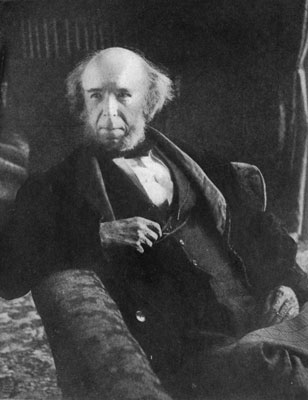 |
| Herbert Spencer at 78 |
Truxtun Park I also thought about putting together a book of Spencer's writings along with commentary about how they relate to current political debates. I didn't know that nearly 100 years before Beale had done the same thing. Other than seeing his name on a plaque, I had no idea who he was. I wonder if Beale thought up the idea while at his Annapolis retreat. Maybe I should really work on that project now and dedicate it to Truxtun Beale.
Beale eventually died in 1936 at his country home in Annapolis. His house must have been in or around the area, but I do not know where. He was buried in Williamsburg, VA. . But that doesn't answer why it was named after his first name or why the spelling is different for Truxton Heights. A simple answer may be that he didn't name the park after himself. It was likely named after his grandfather, who he was also named after, Thomas Truxtun, a naval officer during the Revolutionary War who later rose to the rank of Commodore. In the days before the grammar and spelling nazis required conformity, spelling was not always consistent and sometimes Thomas Truxtun's name was spelled as Thomas Truxton. What is the right version? Who knows? But it probably made sense to use both spellings to make sure that his memory was properly honored.
So there you have it, the history of Truxtun Beale who donated the land that became Truxtun Park. And in case you are wondering, there is a Beale Park out there, but it is in California.
Related:
The 'witch's grave' in Truxtun Park.
Saturday, October 26, 2013
Book about Glen Burnie from Back Creek Books in Annapolis
Amazon.com is a great place to buy books. Small bookshops and even big retailers, like Borders, have been driven out of business by it. It is the favorite complaint of some that this is just not fair. They especially like to complain about the fact that online retailers do not have to collect sales taxes. That advantage is vanishing for Amazon as they expand into more states, including Maryland. So what will some of the small merchants complain about next? Who knows? But some always have someone or something to blame.
Good merchants know that no one owes them anything. They don't complain about the internet. They don't sit around and grip about things being unfair. They spend their energy creating experiences that are unique and that offer value, whether tangible or intangible, to the consumer. If possible, they find a niche market that cannot be properly served by the big retailers. They also use the internet. And they do well.
Back Creek Books on Main Street in Annapolis is a small business like this. A small independent bookstore should have no business surviving, let alone thriving, in the world of Amazon.com. But it does. Among the many great things about it, it offers books that you just can't find elsewhere or that you wouldn't otherwise discover. Among other things, they have a great selection of unique books about Maryland.
 One book that I picked up recently was 1988 Glen Burnie 100, Our Spirit Lives, A Pictorial History 1888 - 1988. I cannot find this book anywhere on Amazon or anywhere else online (that is not to say that it might not eventually end up for sale somewhere online in the future).
Glen Burnie is an unincorporated area in the northern part of Anne Arundel County near Baltimore City. It is more of a working class area, although there are some nicer parts, especially around the water. Every time I drive through or bike through on the B&A trail, I always want to explore more. You get the feeling that there are probably a million untold stories and forgotten legends from the area. So when I saw this book, which was published in 1988 by the Northern Anne Arundel County Chamber of Commerce, I was excited.
Regarding the book itself, I was slightly disappointed. It was more like a yearbook, full of pictures but short on information. For example, it has a picture of Glen Burnie in 1895 and mentions that the town hall, also called the "Orange Hall" could be seen in the background. What business was conducted at this town hall? Was Glen Burnie ever an incorporated city? Why was it called the Orange Hall? It mentions that the area was settled by Elias Glenn, a lawyer from Baltimore whose parents were originally from Scotland. Did he name the town hall the Orange Hall out of sympathy with the Orange Order in Scotland or was it simply just painted orange because that was the only color paint they had sitting around? When was the Orange Hall taken down and why? Does anything sit on the site today (or in 1988)? They put in lots of old pictures, which was nice, but details about the history were missing.
I was also struck by the fact that there were hardly any non-white people in the photographs. Glen Burnie is a diverse place with many blacks, Asians, and Hispanics, although it is mostly white. I'm sure it was less diverse in 1988 and before. Still, it did seem that the non-white segment of the population was under represented in this book.
Despite all this, the book did provide some insight into the history of the area and when I get time I hope to compare some of the pictures in the book to how the area looks today.
I'm glad that I found this book, despite the fact that I found it lacking in some respects. I am looking forward to returning to Back Creek Books to see what else I can find.
Related:
Maryland Folklore - Book Review
Good merchants know that no one owes them anything. They don't complain about the internet. They don't sit around and grip about things being unfair. They spend their energy creating experiences that are unique and that offer value, whether tangible or intangible, to the consumer. If possible, they find a niche market that cannot be properly served by the big retailers. They also use the internet. And they do well.
Back Creek Books on Main Street in Annapolis is a small business like this. A small independent bookstore should have no business surviving, let alone thriving, in the world of Amazon.com. But it does. Among the many great things about it, it offers books that you just can't find elsewhere or that you wouldn't otherwise discover. Among other things, they have a great selection of unique books about Maryland.
One book that I picked up recently was 1988 Glen Burnie 100, Our Spirit Lives, A Pictorial History 1888 - 1988. I cannot find this book anywhere on Amazon or anywhere else online (that is not to say that it might not eventually end up for sale somewhere online in the future).Glen Burnie is an unincorporated area in the northern part of Anne Arundel County near Baltimore City. It is more of a working class area, although there are some nicer parts, especially around the water. Every time I drive through or bike through on the B&A trail, I always want to explore more. You get the feeling that there are probably a million untold stories and forgotten legends from the area. So when I saw this book, which was published in 1988 by the Northern Anne Arundel County Chamber of Commerce, I was excited.
Regarding the book itself, I was slightly disappointed. It was more like a yearbook, full of pictures but short on information. For example, it has a picture of Glen Burnie in 1895 and mentions that the town hall, also called the "Orange Hall" could be seen in the background. What business was conducted at this town hall? Was Glen Burnie ever an incorporated city? Why was it called the Orange Hall? It mentions that the area was settled by Elias Glenn, a lawyer from Baltimore whose parents were originally from Scotland. Did he name the town hall the Orange Hall out of sympathy with the Orange Order in Scotland or was it simply just painted orange because that was the only color paint they had sitting around? When was the Orange Hall taken down and why? Does anything sit on the site today (or in 1988)? They put in lots of old pictures, which was nice, but details about the history were missing.
I was also struck by the fact that there were hardly any non-white people in the photographs. Glen Burnie is a diverse place with many blacks, Asians, and Hispanics, although it is mostly white. I'm sure it was less diverse in 1988 and before. Still, it did seem that the non-white segment of the population was under represented in this book.
Despite all this, the book did provide some insight into the history of the area and when I get time I hope to compare some of the pictures in the book to how the area looks today.
I'm glad that I found this book, despite the fact that I found it lacking in some respects. I am looking forward to returning to Back Creek Books to see what else I can find.
Related:
Maryland Folklore - Book Review
Sunday, October 13, 2013
Feed Annapolis 5 Miler
The Feed Annapolis 5 Miler is a 5 mile charity race in Annapolis created by the Revolution church. Revolution is a Protestant evangelical non-denominational church that markets itself to people "who don't like church". Feed Annapolis is their charity wing that gets food to poor people. Of course, with food stamps, school lunches, and the rest, I'm not so sure that people are starving here. But feeding the poor should be done by private groups and individuals, not the State, so I was happy to help out, even if the entry fee seemed a bit high.
The race was on the morning of Saturday, August 17, 2013. It started at Bates Middle School, which is less than a half mile from my house, so I walked there. There appeared to be enough parking for everyone.
The volunteers and everyone else seemed reasonably pleasant and the race started without incident. The course took us around the school area, then around my neighborhood, and then through Truxtun Park, then back through my neighborhood, then through the outskirts of Murray Hill, before ending back where we started. It was a bit disappointing that the race never took us downtown. But knowing the local politics, I wasn't surprised. The downtown residents complain endlessly about every event, especially sporting ones, at the City Council meetings. The race directors may have decided that it wasn't worth the effort to get a permit for a downtown run. I don't blame them.
The course was easy enough to follow and well marked. And volunteers were at every turn so no one could get lost.
There was some food after the race. The Chick-fil-a breakfast sandwiches were decent, but sort of dry. Some catsup and/or mayonnaise and pickles would have made them better.
They encouraged people afterwards to line up and put together a box of food by walking down a long line and filling the boxes with food that was out on a table. The church members would then take that food to the poor.
I ran the race with Eric Knowles, who is also running for State Senate. Eric is a good guy. He isn't a career politician. He works for a living as a bartender. He doesn't compromise his beliefs to get elected. He is one of the few people running for office who has actually understands the proper role of government. We ran at a comfortable 9:18 per mile pace and had a good political discussion as went. Regretfully there was no beer provided after the race. We did walk to my house afterwards where we continued our political discussion and drank some beer that I had sitting around.
The race was on the morning of Saturday, August 17, 2013. It started at Bates Middle School, which is less than a half mile from my house, so I walked there. There appeared to be enough parking for everyone.
The volunteers and everyone else seemed reasonably pleasant and the race started without incident. The course took us around the school area, then around my neighborhood, and then through Truxtun Park, then back through my neighborhood, then through the outskirts of Murray Hill, before ending back where we started. It was a bit disappointing that the race never took us downtown. But knowing the local politics, I wasn't surprised. The downtown residents complain endlessly about every event, especially sporting ones, at the City Council meetings. The race directors may have decided that it wasn't worth the effort to get a permit for a downtown run. I don't blame them.
The course was easy enough to follow and well marked. And volunteers were at every turn so no one could get lost.
There was some food after the race. The Chick-fil-a breakfast sandwiches were decent, but sort of dry. Some catsup and/or mayonnaise and pickles would have made them better.
They encouraged people afterwards to line up and put together a box of food by walking down a long line and filling the boxes with food that was out on a table. The church members would then take that food to the poor.
I ran the race with Eric Knowles, who is also running for State Senate. Eric is a good guy. He isn't a career politician. He works for a living as a bartender. He doesn't compromise his beliefs to get elected. He is one of the few people running for office who has actually understands the proper role of government. We ran at a comfortable 9:18 per mile pace and had a good political discussion as went. Regretfully there was no beer provided after the race. We did walk to my house afterwards where we continued our political discussion and drank some beer that I had sitting around.
Chestertown Tea Party 10 miler
 In recent years, the Chestertown Tea Party Festival organizers have felt the need to add a disclaimer that their event is not political. Their festival is inspired by a real, or at least legendary, event. Whether or not the citizens of Chestertown participated in an act of vandalism to protest British taxes is unclear. But that
doesn't stop the town from celebrating it. They have been doing so every
year, on Memorial Day weekend since 1968, which obviously predates the
recent Tea Party political movement. So it must annoy them that they have to add a disclaimer.
In recent years, the Chestertown Tea Party Festival organizers have felt the need to add a disclaimer that their event is not political. Their festival is inspired by a real, or at least legendary, event. Whether or not the citizens of Chestertown participated in an act of vandalism to protest British taxes is unclear. But that
doesn't stop the town from celebrating it. They have been doing so every
year, on Memorial Day weekend since 1968, which obviously predates the
recent Tea Party political movement. So it must annoy them that they have to add a disclaimer. 
The festival has all sorts of events, but the only one I participated in was the 10 mile race. Called the Run for Radcliffe, the race benefits the private Radcliffe school which is for kids with learning disabilities.
The race started at 8 am on Saturday, May 25, 2013. I overslept a bit and had to rush to get there from Annapolis. As a result, I missed my normal 2-3 cups of coffee. The excitement of the race was a nice substitute, however.
It was a bit crowded at the start because there was also a 5k race that was starting at the same time. However, after about a mile or so, the 5k runners changed course and the race became much less congested.
 |
| Downtown side street |
I started out in the back and slowly increased my speed throughout the race. My five mile pace (they had a timing map at the 5 mile mark and we wore RFID chips on our shoes) was 9:44 per mile. My total race pace, at the end, was 9:30 per mile. So I was faster in the second half. It wasn't my best race, but I wasn't dissatisfied. Some older guy passed me in the first mile. He was huffing and puffing, while I was relaxed. I made it my mission to pass him, but did so slowly. I had him in my sights for a while and finally passed him around mile 7 and didn't see him again until after I finished.
The finish was great. They had a beer truck set up with free beer from the Fordham Brewery. I drank in moderation because I was driving and because it was still morning. I only had 3 to 4 pints. I walked around for a while before heading back.
I would certainly do this race again and recommend it to others. It was well supported, it was for a good cause, the people were friendly, it was a nice course, and they had free beer. What else could you ask for?
Subscribe to:
Posts (Atom)