Sunday, March 2, 2014

No Mean City - book review

The other day at Back Creek Books in Annapolis, I picked up a signed copy of No Mean City by Theodore McKeldin.

The book, published in 1964, is a short look at three of Baltimore's biggest benefactors: George Peabody, Johns Hopkins, and Enoch Pratt. McKeldin, who was then serving as mayor of Baltimore (after having previously served as Maryland's governor and another term as Baltimore's mayor before that), praised their civic spirit and hoped to encourage others in Baltimore to take an interest in the well-being of their city. This book was written during a period when Baltimore, like other urban areas, was facing some unrest and turmoil.

The main theme of the book was that it was good for private individuals, especially those who had been successful, to give back to their community. He did not advocate for forced redistribution of wealth, but rather for people to take an interest in the welfare of other people. McKeldin wrote, "In the Old World an ungenerous king was despised, and princes, dukes, and other ranks of the nobility were considered under an obligation, measured according to rank, to correct injustice and relieve distress. But in the Old World, the private individual, and especially the man 'in trade,' was held to no such standard. . . .  In the New World it was Peabody who set a different standard for successful businessmen." The irony of is that when McKeldin was writing this book, the nation was slowly reverting back to the old standard. Today people expect the government to provide them with everything, while many wealthy people feel no moral obligation to give back. After paying their taxes, many feel as though they have given enough. This is a reversion from the traditional American libertarian position in support of private charity.

McKeldin gives us a brief history of Peabody, Hopkins, and Pratt, starting with George Peabody. Born in South Danvers (now Peabody), Massachusetts in 1795, Peabody was forced to leave school at age 11 to help support his family. He went to work as a grocer. He learned quickly and by age 19 was the manager of a wholesale drygoods business in Washington, D.C. Before he was 21, he was made a partner and shortly thereafter the firm of Riggs & Peabody moved to Baltimore. Peabody took up the study of banking and became to get involved in that business. Before long he was able to start the banking firm of George Peabody & Company in London. Peabody moved there and achieved great success. He took on another partner, Junius Spencer Morgan. After a few transformations, their firm exists today under the name of his partner's son, J.P. Morgan.
George Peabody

Peabody achieved great wealth and believed it was his responsibility to use it for the betterment of all. While in London he worked to improve housing for the poor and his work still continues through the London based Peabody Group. In terms of his relationship with Baltimore, Peabody personally guaranteed a loan of $8 million (a sizeable amount at the time) to the State of Maryland when it was facing insolvency, without which no bank was willing to offer Maryland the necessary loan. He didn't charge the typical commission as he viewed this as a public service. He is also, of course, known for starting the Peabody Institute in Baltimore and for various other philanthropic endeavours around the English speaking world.

Johns Hopkins was the focus of the next chapter in the book. McKeldin was insistent that Baltimoreans, at least, get his name right. He wanted to make sure that we knew that his name was "Johns", not "John". You can generally tell the difference, even today, between an outsider and a native by whether or not he says Hopkins's name correctly. Hopkins was born in 1795 in Crofton, Maryland. His parents were Quakers and when the church issued an edict in 1807 banning Quakers from owning slaves, his parent obeyed and freed theirs. The result was that he and his siblings had to drop out of school to work the family's tobacco farm. At age 17, he was taken into his uncle's grocery business. His hard work and natural talents were quickly noticed and he did well. He continued in the field of commerce and prospered. He fell into a dispute with his religious community when he agreed to supply goods to people in the Appalachian Mountains in return for whiskey, the only currency that they had. Quakers then condemned the alcohol trade and he was kicked out of the sect. Hopkins, however, rightly believed that he was doing nothing wrong as the poor people of this area had nothing else to trade with and needed goods. After this, he quit his uncle's firm and started his own.

Johns Hopkins
Hopkins was known as an eccentric. For example, McKeldin tells us that he refused to buy an overcoat and preferred to walk long distances to his appointments, even though he could easily afford cab fare. Perhaps it was his way of thinking differently that allowed him to succeed by seeing opportunities that others missed. He "led the way in developing the facilities of the port, especially in building huge warehouses to handle the traffic that had not yet arrived, but he knew was coming. He poured money into that relatively new thing, the railroad." At the time of his death, he was the largest individual shareholder in the Baltimore & Ohio Railroad.

Like Peabody, Hopkins felt a responsibility to use his wealth to help his community. And while he may have been stingy with the money he spent on himself, he was generous with the money he used to help others. As a port city, Baltimore had its fair share of fevers, poxes, plagues, and other infections. Hopkins believed that the city needed a "great hospital". Of course, that would later result in the creation of Johns Hopkins Hospital. Regret over his lack of much formal education may have been the impulse behind his donation to found Johns Hopkins University. His legacy lives on in Baltimore, where The Johns Hopkins Institutions combined are Baltimore’s largest employer.

If you live in Baltimore, you certainly know the Pratt name. Pratt Street is the main road through the downtown area. You might borrow books from the Enoch Pratt Free Library. And if you ever have a breakdown, they might take you to the Sheppard Pratt Hospital. So, who is this Pratt? Well, Pratt Street is actually named after the Whig lawyer, Charles Pratt, not the subject of McKeldin's book. But the rest are named after Enoch Pratt.

Pratt was born in 1808. Like Peabody, he was also from Massachusetts and like Peabody and Hopkins had little formal schooling. But unlike Peabody and Hopkins, he dropped out by choice. At age 15, he felt he had learned enough and quit school to go into merchandising. After making $150, he headed south and setup shop in Baltimore.
Enoch Pratt

It is amazing to think that these men were so successful with such little formal education. I know of people who have spent years in school, often taking on large amounts of debt, and many of them can only find menial work around town. We are told that every child must complete a certain amount of basic education. Parents are fined and jailed if they take their kids out of school. We have a Federal government that now tries to set down a common curriculum that everyone must follow. Yet in the more libertarian American past, where people were left alone, we had tremendous prosperity and social mobility.

It was in this free environment that Pratt, as teenager, was able to run his own business. He used a wheelbarrow to make his deliveries and according to "the local tradition . . . he started life as peddler, nails and mule shoes being his specialities." He was soon after able to start the firm of E. Pratt & Brothers and invested his profits in transportation, banks, and fire insurance companies. By 1872, he owned a majority share in Maryland Steamboat Company. From there he had continued success and kept amassing money.

Like Hopkins, it was said that he was cheap when it came to purchasing his own clothing and some people saw him as a miser. But he was idealistic and generous with his own money. He was a strong opponent of slavery and also tried to provide opportunities to black children. For example, when he offered Baltimore City $833,333.333 in cash to open a library in 1882, it was on the condition that it be open to all residents, regardless of race, creed, or nationality. In addition, as McKeldin put it in 1964, "He was among the first to do something practical for those colored boys and girls who had made one slip, but who were not yet beyond hope of rehabilitation. He gave a farm of seven hundred acres in Prince George's County to be used as a reform school for such children. Today it is known as Cheltenham, where the work he started still goes on, although Pratt has been in his grave nearly three quarters of a century." Cheltenham is still in existence today as a juvenile detention facility. I wonder if he would be proud of what it has become. I doubt it.

McKeldin's short book focused on Peabody, Hopkins, and Pratt, but also gave mention to other famous people who helped shape the city. He also quickly referenced famous Marylanders such as Reverdy Johnson, John P. Kennedy, Roger B. Taney, and Charles J. Bonaparte, who he said "brought honor and fame" to Baltimore, but that they belonged more to the nation than the city. He was more interested in Peabody, Pratt, and Hopkins for the good that they brought to the city itself. McKeldin encouraged all of his fellow Baltimoreans to work for the betterment of the city. He wrote, "But anyone can live in Baltimore, provided he is sufficiently respectful of the law not to be removed to the penitentiary. Anyone who has the will and the energy to do so can contribute to the spirit of the place. The contribution may not be great, but it counts."

That is good advice for all. Some people like to assert that libertarian-minded people are opposed to society and don't believe in community. A shrill socialist woman from Massachusetts who unfortunately holds a US Senate seat, likes to give a little stump speech where she tells successful people that they didn't get successful on their own. That is true, to an extent. But as Bastiat wrote, "Socialism, like the ancient ideas from which it springs, confuses the distinction between government and society. As a result of this, every time we object to a thing being done by government, the socialists conclude that we object to its being done at all." People should take an interest in the well being of their communities and most naturally will, if left alone. We object to the government confiscating large amounts of wealth under the guise of fairness to waste away on pointless wars and useless agencies. Does anyone seriously think that Baltimore would be a better place today had Peabody, Hopkins, and Pratt had over half their fortunes confiscated by the government? Would elected officials have invested their money as wisely as they did? The answer is obvious.

Monday, February 17, 2014

H. L. Mencken Graveside Memorial 2014

Last year I attended the Mencken graveside service at Loudon Park Cemetery in Baltimore.

This year I missed the event, but thanks to the magic of cameras and youtube, I was able to watch it online. And you can too.


I wish the Friends of the Mencken House would do a better job promoting their events. I have also suggested to them that they could increase their membership numbers by making it possible to join their organization online. I would pay the $40 membership fee if I could use Paypal instead of having to dig out my checkbook (I think I still have one somewhere) and mail them a check (do I even have any stamps?). I have suggested to them several times that this would increase their numbers and attract younger supporters. No one ever does anything. Maybe someone over there will see this and setup an online membership application. I could do it for them, if they think it is too hard.

Sunday, January 19, 2014

Mysteries and Lore of Western Maryland - book review

The other day on Amazon, I bought Mysteries and Lore of Western Maryland: Snallygasters, Dogmen, and other Mountain Tales by Susan Fair. I haven't spent much time in western Maryland, but it seems like an interesting place. I picked up this book because I intend to visit there more often and wanted to know what places might be interesting to see.

The book is broken up into four parts. Part one is about legendary monsters. Part two is mainly about ghosts . Part three is about weird or strange happenings. Part four is about crimes, odd places and mountains.

In Part one, the author wrote about, among other things, the Snallygaster, a flying beast that allegedly tormented the good people of western Maryland in the days before people had ready access to cameras. The author essentially debunked this legend and offered a reasonable explanation for how it got started. She also discussed other legendary monsters such as the Snarly Yow, the Jabberwock, and the Dwayyo. I confess that I would have enjoyed this part of the book more if the author had argued that these beasts were real and offered 'evidence' that they were still stalking the poor people of western Maryland, but I guess her factual take on these subjects was more educational.

In Part two, the author addressed "Eerie Entities" of western Maryland. Of most interest to me, was the story about Witch Margery who lived on South Mountain and used her satanic power to terrorize anyone who might come across her. The author also wrote about the Museum of Civil War Medicine in Frederick that is allegedly haunted by, among other spirits, a thieving civil war doctor/embalmer. In addition to the other haunted places, we also learn that little green men described as leprechauns inhabit Allegany County thanks to a General Braddock who somehow managed to bring them over when he left Ireland for Maryland in 1755. Although I can see the Ancient Alien people making an argument that these were really aliens and they were helping the British during the French and Indian War.

Part three covered stuff that could just generally be described as weird. The author wrote about George Alfred Townsend, who bought a large estate out in Burkittsville  with a personal mausoleum that was never used. The author also wrote about Michael Zittle, Jr., the so-called Wizard of South Mountain, who in the 1800s attempted to cure people of various diseases using his "evil spell book." The author debunked the idea that Zittle was using demonic powers. He was a bit of a folk healer, or at least he tried to be. Another person, among the many, the author wrote about was "Harris the Crazy Naked Guy", a "middle-aged Quaker of 'quiet demeanor' and 'humble manners'" who would walk naked through the streets of Cumberland in the 1800s. He was from Virginia, but each spring he would go to Cumberland, take off his clothes, and walk the streets warning about a "terrible calamity" that would hit the town. Aside for once being briefly jailed after entering a church and disrupting the service with his warnings, the people of Cumberland were reasonably tolerant of him. He did this once a year, for five years, until the great fire of 1833 burned down all of the houses along his parade route. One cannot help but wonder if Harris had something to do with starting the fire.

Part four addressed the leftover weird subjects and history, including famous murder trials, executions, places, and stories. For example, the author tells the history of two severed arms, one at the previously mentioned Museum of Civil War Medicine and the other at the Boonsboro Museum of History. She also wrote about the somewhat odd history of the Washington Monument in Washington County and Fort Frederick, which, of course, is haunted. The section on famous murders and executions was rather morbid. And the book ended with tales about mountains, including Will's Mountain, where two young lovers once jumped to their deaths.

Full or lots of interesting information and stories that I had never heard before, I really enjoyed this book. The list price is $19.99, which is a bit high, but not unreasonable. Amazon does discount books from time to time, especially if you have Amazon Prime. You might also look out for cheaper used copies. The Kindle version is $9.99, which does strike me as too high. But I believe that most Kindle books are overpriced. Nevertheless, I recommend this book.

Sunday, October 27, 2013

Truxtun Park/Truxton Heights of Annapolis

The last few years I have been living in the Truxton Heights area of Annapolis. Truxton Heights overlooks Truxtun Park. I always thought it was odd that there were two different spellings of the name and assumed that it was a mistake by developers when they named Truxton Heights. I had never given much thought to the history of the name, despite the fact that I had previously included a brief story about the legendary witch of the area in my book, Witch Trials, Legends, and Lore of Maryland. The only thing I knew about the area was that the park was donated to the City of Annapolis in the 1930s by a Truxtun Beale. I learned this from reading a marker in the park. I sort of just assumed that Truxtun Beale was probably a batty old rich woman who donated the land when she died. And I thought it was odd that they named it after her first name. Shouldn't it be Beale Park?

"Don't Fuck with the Trux" was his personal motto,
or at least it should have been.


Well, it turns out that my assumptions were wrong. First, Truxtun Beale was a guy and a very interesting fellow. Born in 1856 in San Francisco, he was a lawyer and a diplomat. He was once the US Ambassador to Persia and then Greece, Romania, and Serbia.

One has to wonder what sort of diplomacy he engaged in. Beale was a badass, for lack of a better term. In 1902, in San Francisco he was charged with shooting a newspaper editor.  He argued it was self-defense and was acquitted. At age 60 in Washington, D.C., he started a fist-fight with a former Navy Secretary.

Beale was also involved in politics. He was a delegate from California to the Republican Convention in 1912. In 1920, he offered cash rewards to young Republicans who came up with the best suggestions for the platform.

An ardent supporter of liberty and limited government, Beale was a big fan of the Herbert Spencer, the legendary English philosopher who was a proto-libertarian of sorts. Spencer died in 1903, but Beale was convinced that the American people in the early 20th century desperately needed his wisdom. In 1916, Beale produced a book of Spencer's writings that were accompanied by commentary from important men such as President/Chief Justice William Howard Taft and Henry Cabot Lodge. In The Man Versus the State a Collection of Essays, Beale hoped to warn his fellow citizens about the dangers of the progressive movement, so-called. The publisher wrote at the start of the book:
It is due to the interest and energy of Mr. Truxtun Beale that these essays of Herbert Spencer, with comments by eminent Americans, have been gathered together into a book. Mr. Beale has been a student and a disciple of Spencer ever since he became acquainted with his work; he has, indeed, been a sort of lay exponent of the Spencerian philosophy in America. It is a long generation since Spencer did the greatest part of his work, but it is not so long since these essays were new and vital in the world. They are filled with straight thinking and fundamental truths about man's efforts to construct social organisms and state systems, and the inevitable failure of democracy to bring about that perfection of order and social justice of which man has always dreamed. Spencer looked into the world and into the heart of man, and what he found he set down faithfully and without swerving from the truth. Because of their lack of sentimental thinking and their lack of unfounded hope; because of their recognition of truths not altogether pleasing to our social dreams, these essays, after establishing the foundation of all our modern social thinking, were in a fair way to be neglected, if not forgotten by the world, until Mr. Beale conceived the idea of gathering certain of them together and making them into a book. In pursuit of his idea, Mr. Beale travelled about the country enlisting the aid of a few of those leaders of thought in America who know the tremendous value of Spencer's work in our social system; and he succeeded in inducing these men to write critical and interpretative comments on the essays, as they appear in the light of what they can teach us in relation to the problems' that are perplexing America to-day. This book is the result of Mr. Beale's adventure in preaching the gospel according to Herbert Spencer.
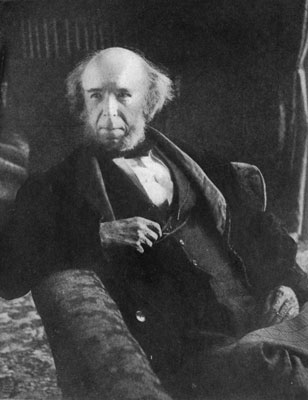
Herbert Spencer at 78
The reason I find this so fascinating is because after I found and started reading Spencer, I also became a fan of his work. One day when walking my dog in
Truxtun Park I also thought about putting together a book of Spencer's writings along with commentary about how they relate to current political debates. I didn't know that nearly 100 years before Beale had done the same thing. Other than seeing his name on a plaque, I had no idea who he was. I wonder if Beale thought up the idea while at his Annapolis retreat. Maybe I should really work on that project now and dedicate it to Truxtun Beale.

Beale eventually died in 1936 at his country home in Annapolis. His house must have been in or around the area, but I do not know where. He was buried in Williamsburg, VA. . But that doesn't answer why it was named after his first name or why the spelling is different for Truxton Heights. A simple answer may be that he didn't name the park after himself. It was likely named after his grandfather, who he was also named after, Thomas Truxtun, a naval officer during the Revolutionary War who later rose to the rank of Commodore. In the days before the grammar and spelling nazis required conformity, spelling was not always consistent and sometimes Thomas Truxtun's name was spelled as Thomas Truxton. What is the right version? Who knows? But it probably made sense to use both spellings to make sure that his memory was properly honored.

So there you have it, the history of Truxtun Beale who donated the land that became Truxtun Park. And in case you are wondering, there is a Beale Park out  there, but it is in California.

Related:

The 'witch's grave' in Truxtun Park.

Saturday, October 26, 2013

Book about Glen Burnie from Back Creek Books in Annapolis

Amazon.com is a great place to buy books. Small bookshops and even big retailers, like Borders, have been driven out of business by it. It is the favorite complaint of some that this is just not fair. They especially like to complain about the fact that online retailers do not have to collect sales taxes. That advantage is vanishing for Amazon as they expand into more states, including Maryland. So what will some of the small merchants complain about next? Who knows? But some always have someone or something to blame.

Good merchants know that no one owes them anything. They don't complain about the internet. They don't sit around and grip about things being unfair. They spend their energy creating experiences that are unique and that offer value, whether tangible or intangible, to the consumer. If possible, they find a niche market that cannot be properly served by the big retailers. They also use the internet. And they do well.

Back Creek Books on Main Street in Annapolis is a small business like this. A small independent bookstore should have no business surviving, let alone thriving, in the world of Amazon.com. But it does. Among the many great things about it, it offers books that you just can't find elsewhere or that you wouldn't otherwise discover. Among other things, they have a great selection of unique books about Maryland.

One book that I picked up recently was 1988 Glen Burnie 100, Our Spirit Lives, A Pictorial History 1888 - 1988. I cannot find this book anywhere on Amazon or anywhere else online (that is not to say that it might not eventually end up for sale somewhere online in the future).

Glen Burnie is an unincorporated area in the northern part of Anne Arundel County near Baltimore City. It is more of a working class area, although there are some nicer parts, especially around the water. Every time I drive through or bike through on the B&A trail, I always want to explore more. You get the feeling that there are probably a million untold stories and forgotten legends from the area. So when I saw this book, which was published in 1988 by the Northern Anne Arundel County Chamber of Commerce, I was excited.

Regarding the book itself, I was slightly disappointed. It was more like a yearbook, full of pictures but short on information. For example, it has a picture of Glen Burnie in 1895 and mentions that the town hall, also called the "Orange Hall" could be seen in the background. What business was conducted at this town hall? Was Glen Burnie ever an incorporated city? Why was it called the Orange Hall? It mentions that the area was settled by Elias Glenn, a lawyer from Baltimore whose parents were originally from Scotland. Did he name the town hall the Orange Hall out of sympathy with the Orange Order in Scotland or was it simply just painted orange because that was the only color paint they had sitting around? When was the Orange Hall taken down and why? Does anything sit on the site today (or in 1988)? They put in lots of old pictures, which was nice, but details about the history were missing.

I was also struck by the fact that there were hardly any non-white people in the photographs. Glen Burnie is a diverse place with many blacks, Asians, and Hispanics, although it is mostly white. I'm sure it was less diverse in 1988 and before. Still, it did seem that the non-white segment of the population was under represented in this book.

Despite all this, the book did provide some insight into the history of the area and when I get time I hope to compare some of the pictures in the book to how the area looks today.

I'm glad that I found this book, despite the fact that I found it lacking in some respects. I am looking forward to returning to Back Creek Books to see what else I can find.

Related:
Maryland Folklore - Book Review